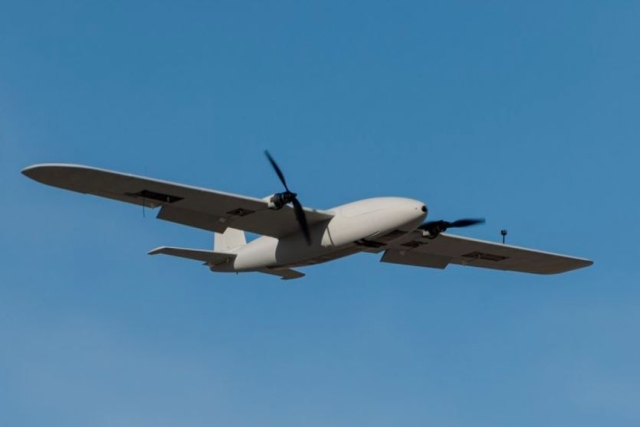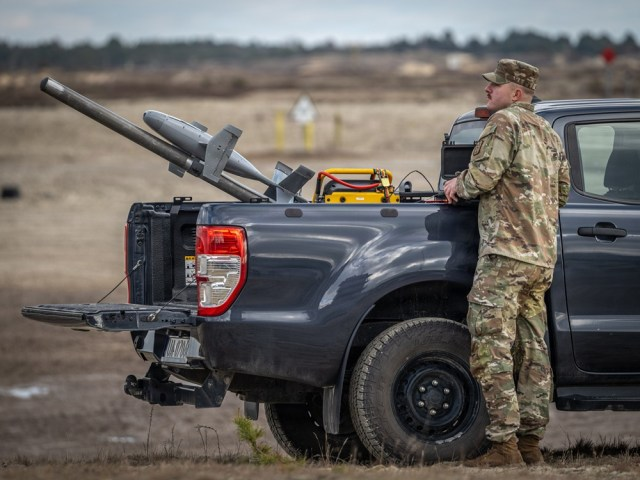
While exquisite, multi-million-dollar platforms like the MQ-9 Reaper aren’t going anywhere, 3D-printed UAVs are carving out a highly specific—and increasingly vital—niche in modern military operations. They aren’t replacing traditional systems, but they are solving a critical bottleneck: the time it takes to go from a mission requirement to a deployable asset.
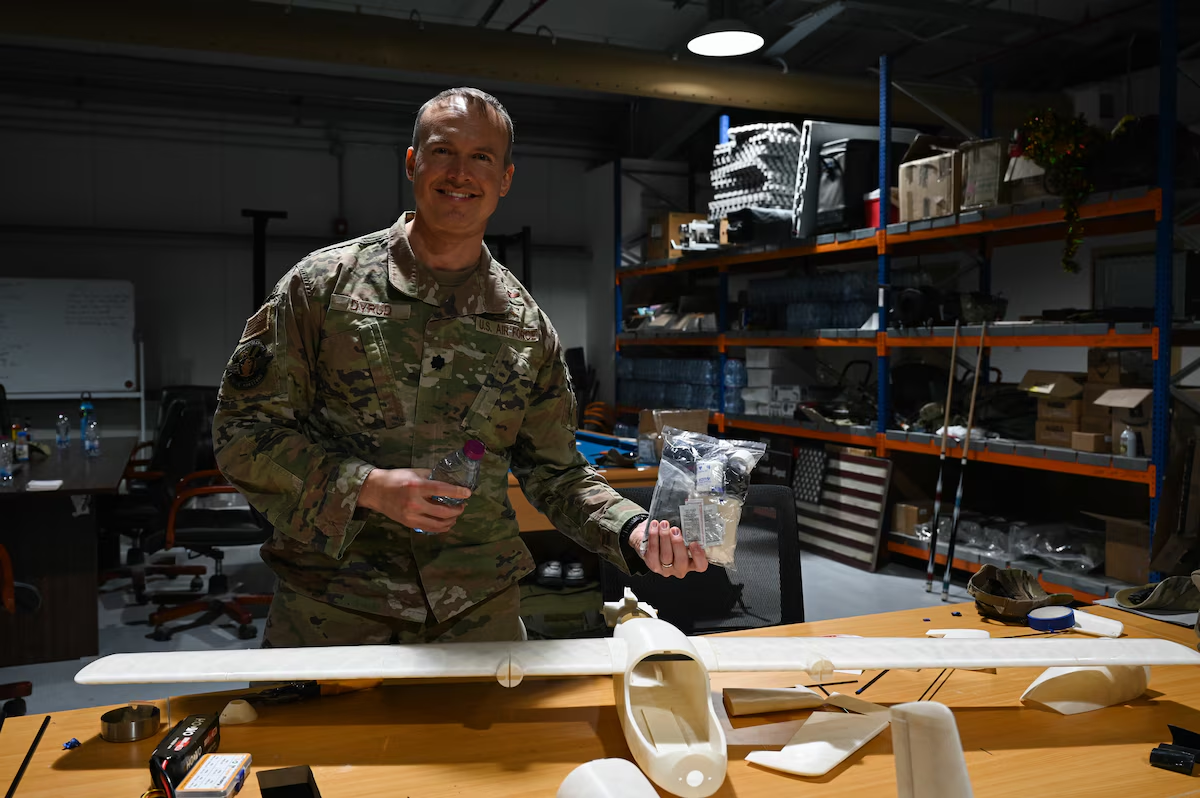
Recently, the U.S. Air Force’s Task Force 99—an experimental unit based in Qatar—demonstrated this shifting dynamic by incorporating AI-designed, 3D-printed drones into their operational workflow in the Middle East.
The primary engineering hurdle with uncrewed systems has always been the lead time. Designing a new airframe, validating the aerodynamics, and tooling up for manufacturing traditionally takes months. Task Force 99 is bypassing this using a software-driven approach developed by California-based Titan Dynamics.
How the Titan Dynamics Workflow Operates:
Instead of relying on off-the-shelf airframes that might not fit the mission, operators feed a set of specific constraints into the AI software—such as the required flight range, payload mass, and loiter time. The system then rapidly generates a custom aerodynamic design and outputs the CAD/G-code needed for fabrication. Local 3D printers can then manufacture the specialized drone within hours.
This rapid-iteration capability is feeding directly into the Pentagon’s broader strategy to field “attritable” assets. When an intelligence, surveillance, and reconnaissance (ISR) platform is cheap and fast enough to print on-demand, losing it to harsh environments or enemy action becomes a manageable logistical data point rather than a mission failure.
While 3D printing may not be the standard for all aerospace manufacturing, for missions requiring rapid, attritable solutions on the fly, it is proving to be a highly effective tool in the engineer’s arsenal.